MKE GROCERY BUDDY: Building a Mutual Aid Network From the Ground Up
Role: Marketing & Media Outreach, Volunteer Operations, Community Engagement
In October 2025, the federal government shutdown left thousands of Wisconsin families facing uncertainty around SNAP benefits. As food assistance stalled and grocery prices continued to climb, many Milwaukee residents were left wondering how they would put food on the table.
While food pantries were already stretched beyond capacity, community organizer (and my friend from high school) Meag Sargent saw an opportunity for neighbors to help neighbors. She put out a message on her instagram stories asking if anyone wanted to help her coordinate a grocery buddy program, and I messaged her immediately.
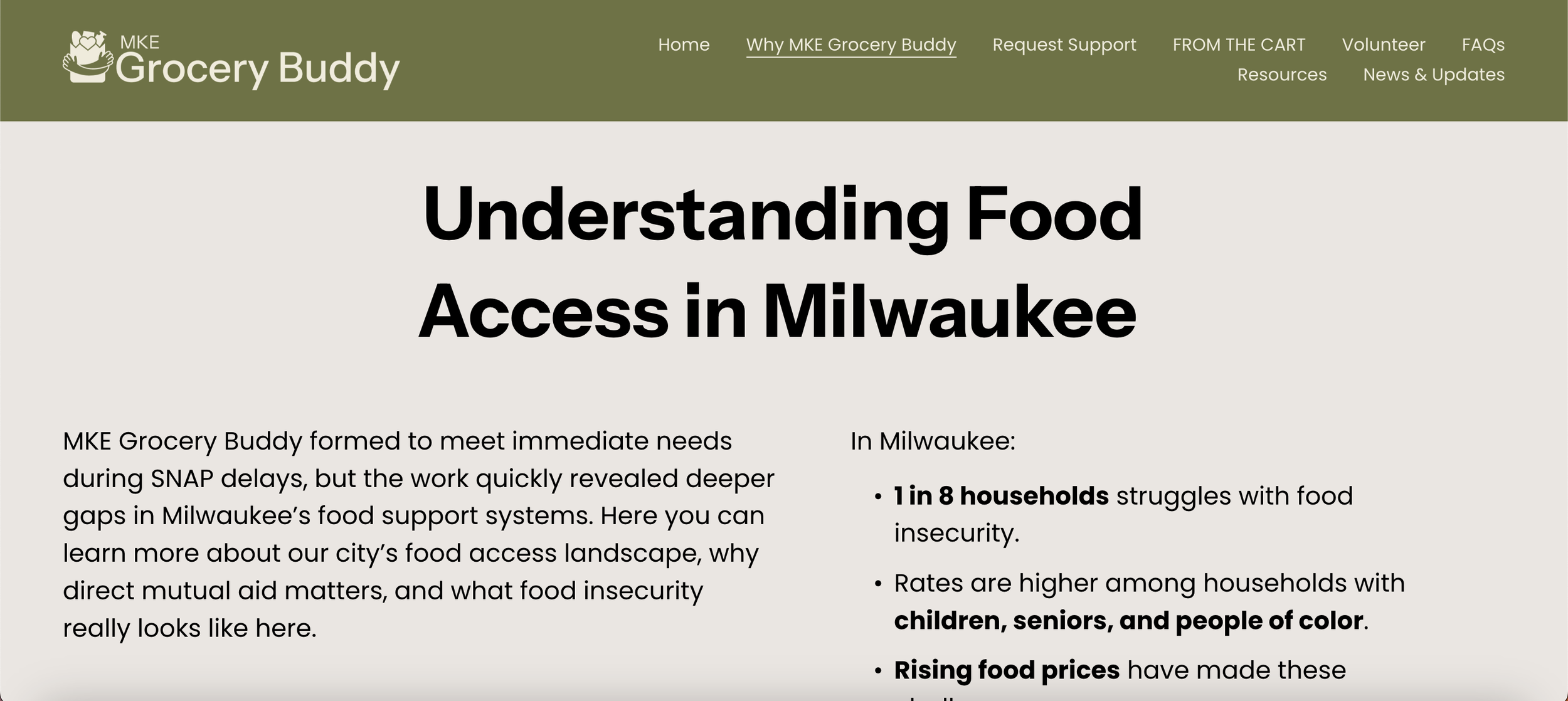
What started as a simple social media post asking people to become "grocery buddies" quickly evolved into a citywide mutual aid network dedicated to connecting volunteers with households experiencing food insecurity.
I joined the founding team alongside Meag Sargent, Jenny Holmdohl, and Michelle Croak to help transform a grassroots idea into an organized, community-led support system.
My Role
As a member of the core organizing team, I helped grow and sustain the initiative through both operations and communications.
My responsibilities included:
Coordinating volunteer and neighbor matches.
Helping design and improve our intake and matching process.
Managing marketing and media outreach.
Building awareness to recruit additional grocery buddies and volunteers.
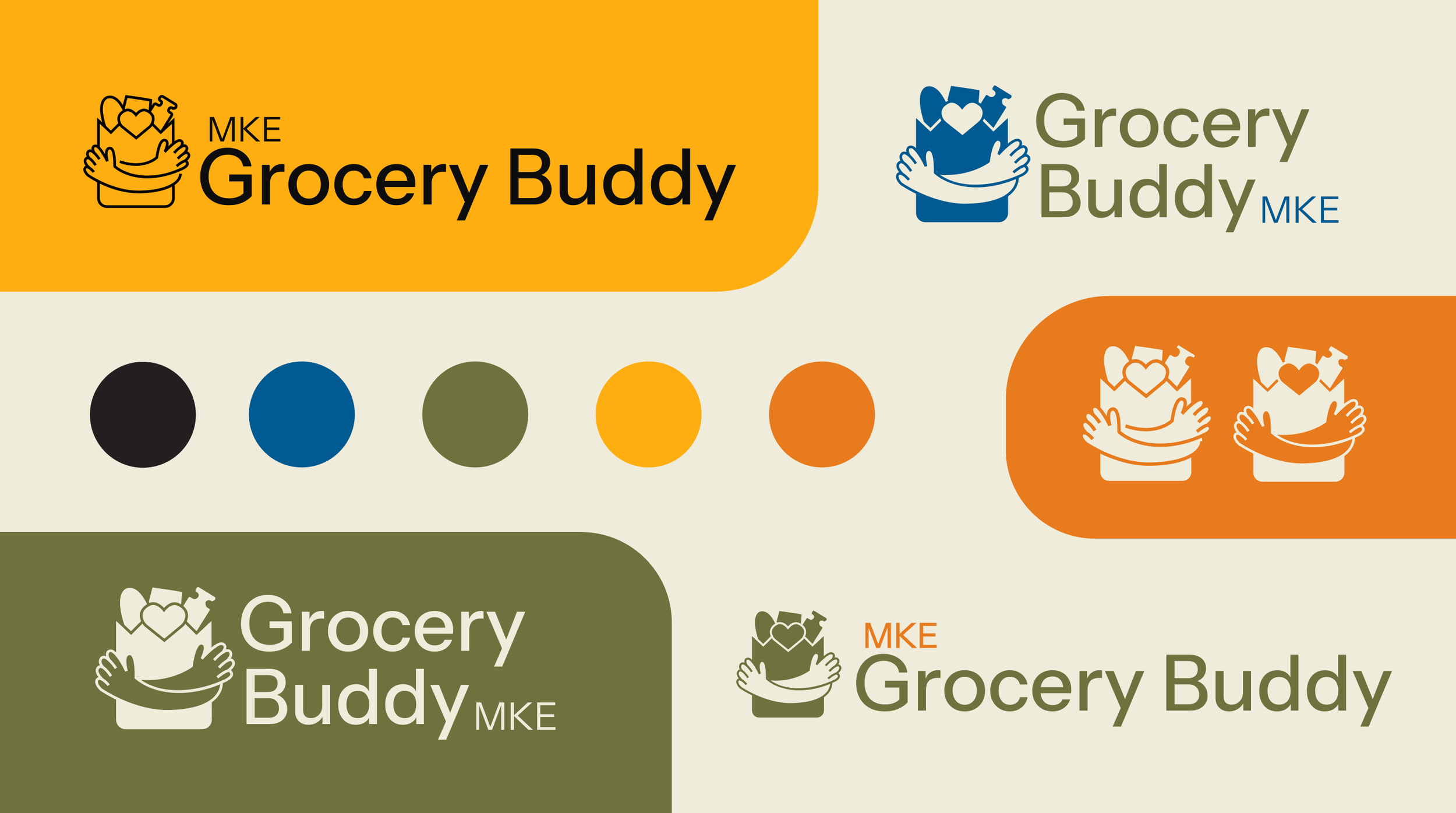
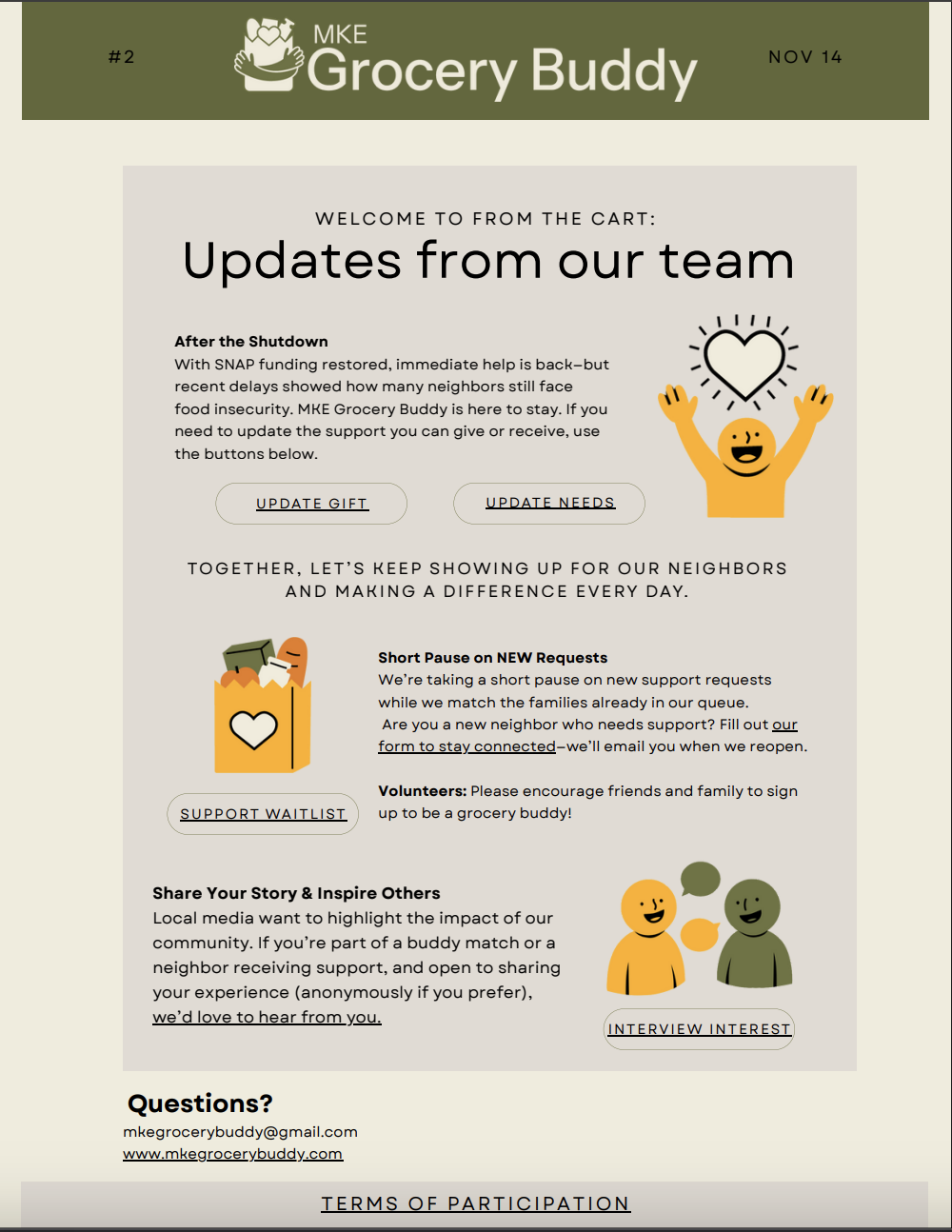
Build out a comprehensive website of resources and a communication hub for volunteers and buddies.
Supporting day-to-day operations as the program rapidly expanded.
Because every organizer volunteered alongside full-time jobs, the work required constant problem-solving, adaptability, and collaboration.
The Challenge
The immediate crisis exposed a larger, ongoing problem.
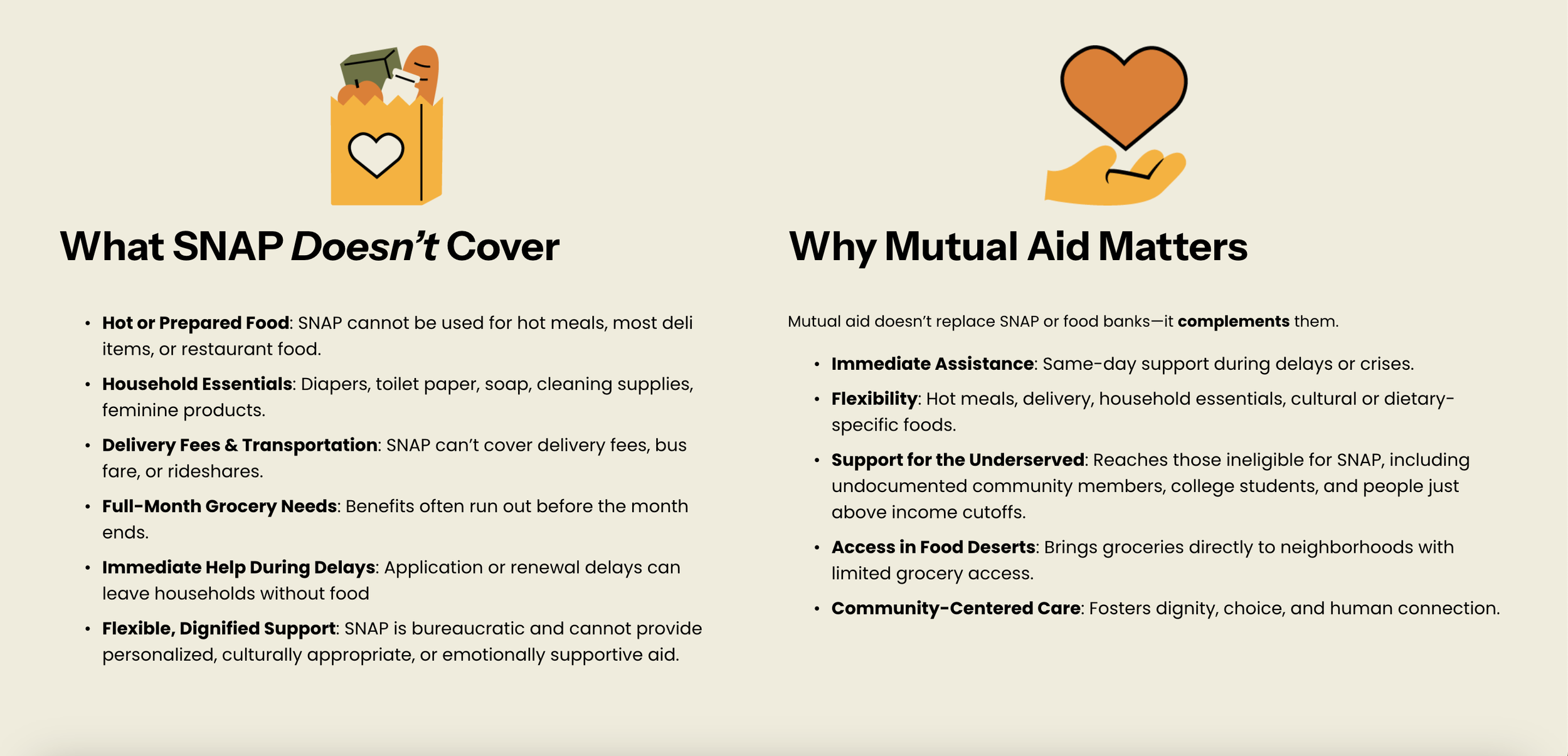
Even when SNAP benefits were restored, many Milwaukee families continued to experience delays, benefit gaps, or income thresholds that left them ineligible despite struggling to afford groceries. Rising food costs only widened the gap, making it clear that food insecurity extended well beyond the government shutdown.
The team needed to build an entirely new system—quickly—with no funding, no nonprofit infrastructure, and no existing playbook.
The Solution
We built MKE Grocery Buddy around one simple idea: make helping your neighbor as easy as possible.
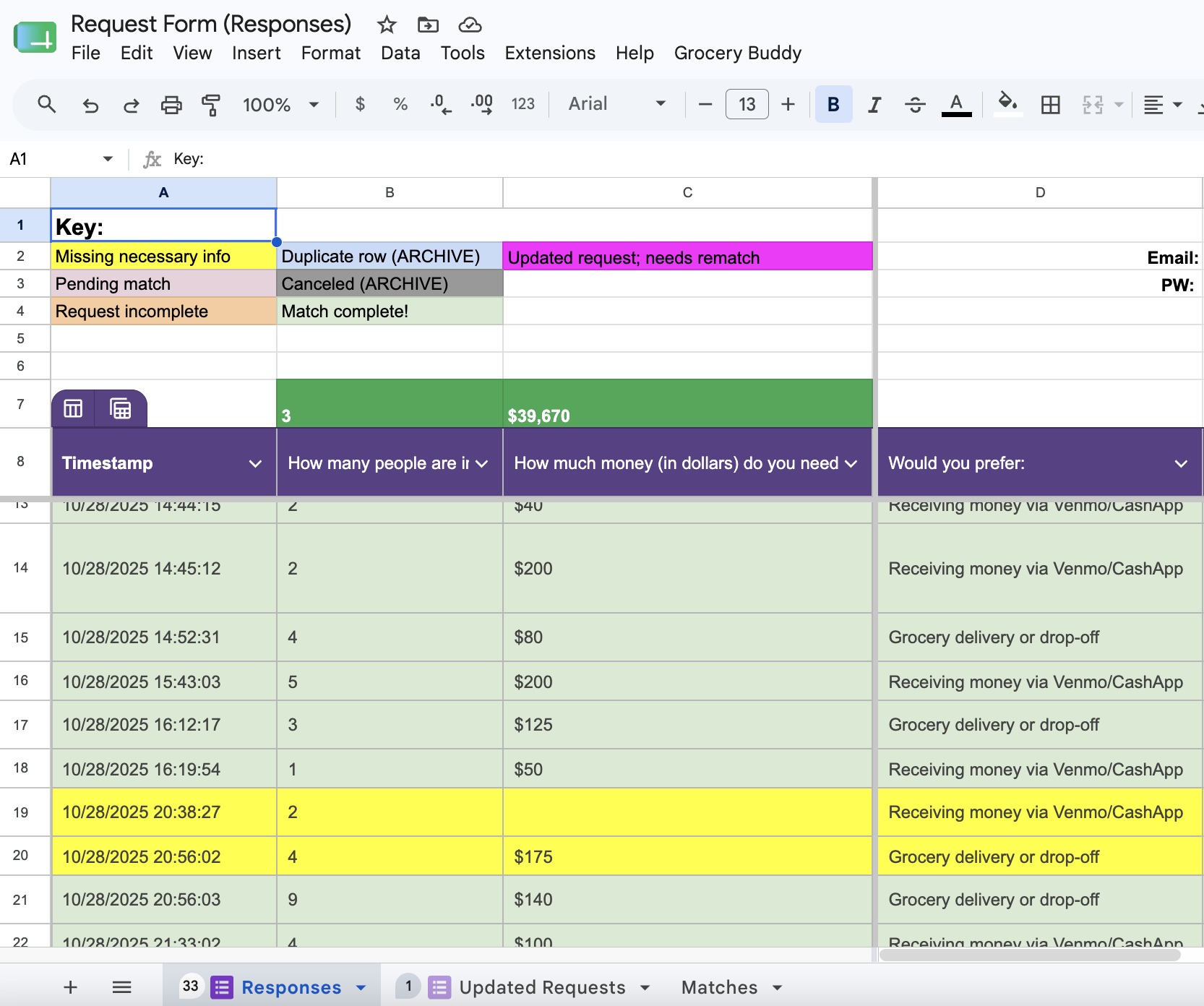
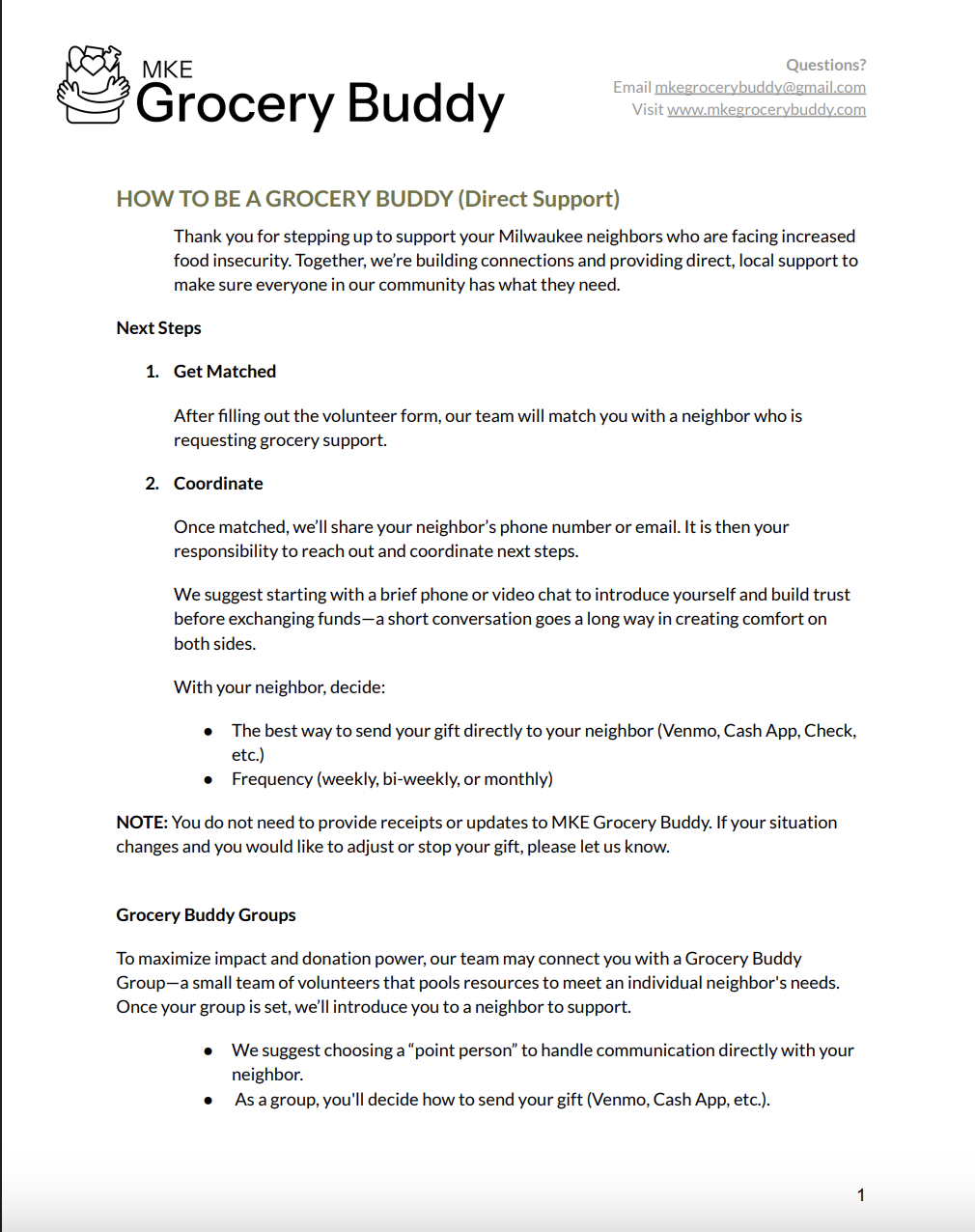
Using a pair of Google Forms, we created a lightweight matching system that connected volunteers directly with neighbors requesting support. Rather than collecting donations ourselves, we introduced volunteers to recipients, allowing them to determine together what support looked like.
That flexibility became one of the program's greatest strengths.
Some grocery buddies sent recurring financial support through Venmo or Cash App. Others purchased and delivered groceries. Many chose to shop alongside their neighbors, creating relationships that extended far beyond a single grocery trip. The model prioritized dignity, trust, and human connection over transactional charity.
As organizers, we continuously adapted our processes in real time—reviewing requests, matching volunteers, answering questions, improving workflows, and expanding volunteer opportunities as community needs evolved.
Results
In just a matter of weeks, MKE Grocery Buddy grew into a citywide mutual aid network.
Impact included:
More than 200 volunteer and assistance requests submitted.
147 neighbors and grocery buddies matched through the program.
Nearly $40,000 in grocery assistance requested.
Hundreds of Milwaukee residents connected through direct, community-driven support.
Beyond groceries, many matches evolved into lasting friendships. Weekly shopping trips, regular check-ins, and holiday meals became common, demonstrating that the greatest impact often came from connection—not just assistance.
Lasting Impact
Although MKE Grocery Buddy was created in response to an emergency, its mission evolved into something much larger.
The project challenged traditional models of charity by replacing anonymous transactions with relationships rooted in compassion, trust, and mutual aid. It demonstrated how quickly communities can mobilize when barriers are removed and people are empowered to help one another directly.
For me, the experience reinforced an important lesson: meaningful systems don't always require large organizations or significant funding. Sometimes they begin with a single idea, a small group of committed people, and a community willing to show up for one another.
While full time jobs and life forced us to wind down operations in February 2026, it was a lifechanging experience that connected me to my neighbors and the struggles of those in my community.
“If someone is brave enough to ask for help, and the thing they are asking for is food support, it is not our job to decide who is ‘worthy’ of anything.”